
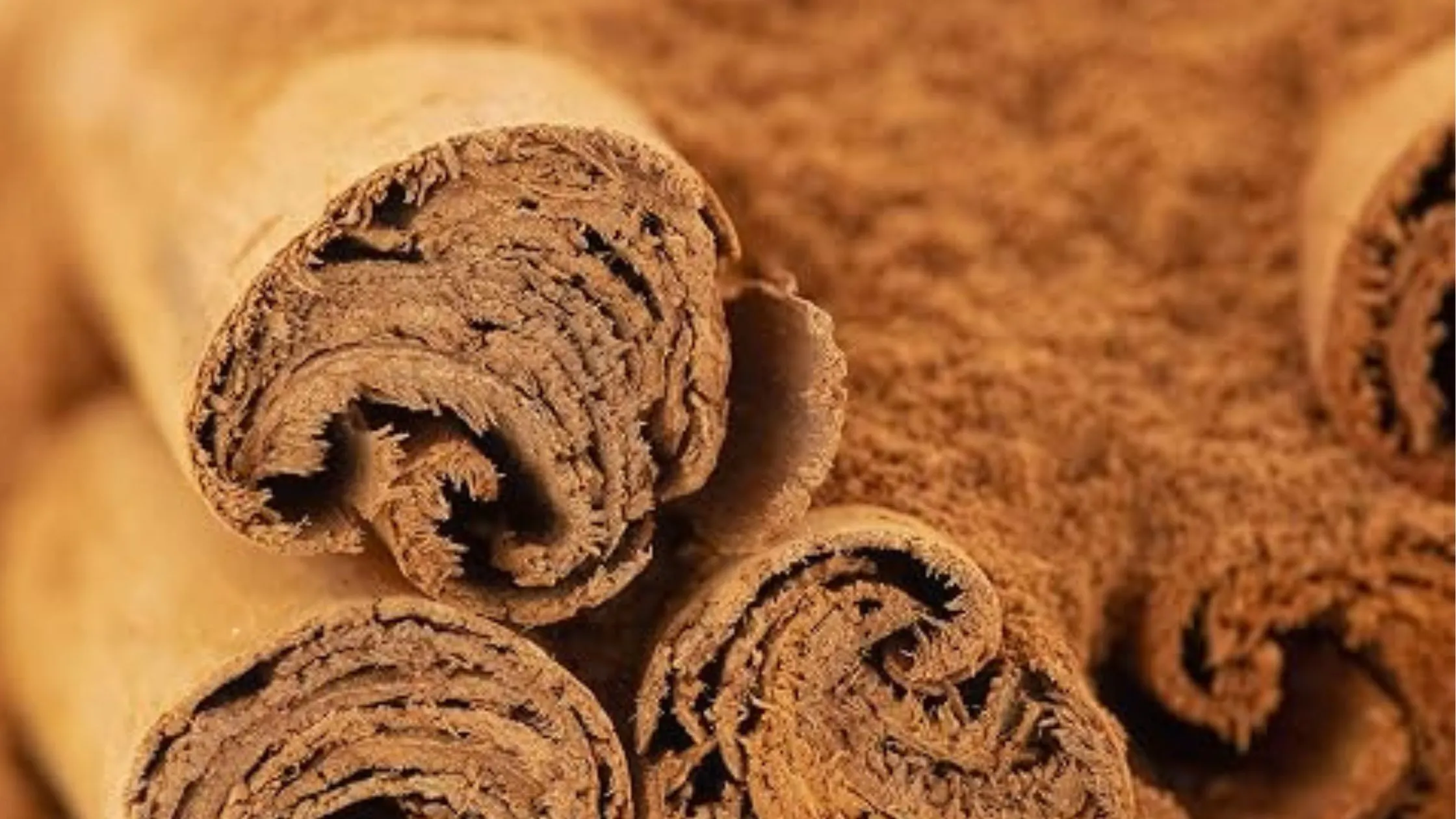
Buying Ceylon cinnamon powder is harder than buying whole sticks. With sticks, you can look at the structure, color, and texture and get a reasonable sense of what you’re dealing with. Once cinnamon is ground, those clues disappear, and you’re left comparing labels, ingredient lists, and photos on a page, or a jar on a shelf that all looks more or less the same.
There’s no single “best Ceylon cinnamon powder” that applies to everyone. The right choice depends on what you’re using it for, how much you’re willing to spend, and how much you can verify about where it came from. This guide walks through what actually matters when comparing products, what doesn’t tell you as much as it seems to, and where marketing language should be treated with a bit of caution.
What Makes a Good Ceylon Cinnamon Powder?
Before comparing specific products, it helps to know what you’re actually checking for. A good Ceylon cinnamon powder generally has:
- The correct species (Cinnamomum verum), ideally stated on the label
- A simple, transparent ingredient list
- Clear origin information
- Reasonable freshness, meaning it hasn’t been sitting ground and exposed to air for years
- Packaging that protects it from light, air, and moisture
- A supplier willing to say where the product comes from and how it’s processed
Color alone doesn’t prove any of this. A powder can look the right shade of tan and still be old, poorly sourced, or blended with something else. Appearance is one input, not a verdict.
1. Check the Botanical Name
The single most useful piece of information on a cinnamon label is the species name: Cinnamomum verum, sometimes written as Cinnamomum zeylanicum. If a product states this clearly, that’s a meaningful transparency signal, because it commits the seller to a specific botanical identity rather than the vague catch-all term “cinnamon.”
A label that just says “ground cinnamon” or “cinnamon powder” with no species name isn’t necessarily fraudulent, but it isn’t telling you anything either. In most retail markets, unlabeled cinnamon defaults to Cassia, simply because Cassia is what’s grown at larger scale and sold more cheaply. The absence of a botanical name doesn’t automatically mean a product is fake Ceylon being passed off under a misleading name. It usually means the product isn’t claiming to be Ceylon in the first place. Read the front label and the ingredient list together before assuming either way.
2. Check the Country of Origin
Ceylon cinnamon is strongly associated with Sri Lanka because that’s where the large majority of Cinnamomum verum is grown and processed, historically and still today. Seeing “Sri Lanka” as the country of origin is a reasonable piece of supporting evidence.
It’s worth being precise about what that does and doesn’t prove. Origin and species are related but not identical. A product could state Sri Lankan origin and still involve some ambiguity in processing or blending, and in principle Ceylon cinnamon trees can be grown in a small number of other regions with suitable climates, even though Sri Lanka dominates production. So origin labeling is a useful signal to look for, not a guarantee on its own, and its absence doesn’t automatically mean a product is fake. Combine it with the species name and ingredient list rather than treating any single piece of information as final proof.
3. Look at the Ingredient List
For a plain culinary cinnamon powder, the ingredient list should ideally say just that: cinnamon, or Cinnamomum verum, and nothing else. That’s what “100% cinnamon” or “pure Ceylon cinnamon” should mean in practice.
Some products are blends rather than pure cinnamon, and that’s not automatically a problem, as long as it’s disclosed. Watch for:
- Added starches or anti-caking agents, sometimes used to prevent clumping in humid climates
- Flavorings, which can make a Cassia-based or blended product taste closer to what people expect from “cinnamon” flavor without actually being pure Ceylon bark
- Sweeteners, common in cinnamon-sugar blends marketed for coffee or baking, which are a different product category entirely from pure cinnamon powder
- Cinnamon extract or “natural cinnamon flavor” listed instead of ground cinnamon bark, which indicates a flavoring product rather than the spice itself
None of these additions are inherently deceptive if they’re listed. The issue is when a product markets itself as pure Ceylon cinnamon while the ingredient list tells a different story. Read past the front-of-package claim and check what’s actually listed.
4. Be Careful With the Word “Ceylon”
“Ceylon” on a label is meaningful, but it shouldn’t be read in isolation. Treat it as one data point to weigh against the species name, origin information, and ingredient list, not as a claim that settles the question by itself.
This isn’t about assuming brands are lying. Most sellers who use the word “Ceylon” are describing their product accurately. But labeling standards and enforcement vary by country and marketplace, and independent testing has occasionally found mislabeled products in the wider spice trade. The practical takeaway isn’t suspicion of every product that says “Ceylon,” it’s that a single word on a package is easier to verify when it’s backed up by consistent species, origin, and ingredient information rather than standing alone.
5. Understand What Ceylon Cinnamon Powder Should Look and Smell Like
Ceylon cinnamon powder generally has a lighter, more tan or sand-toned color compared to the darker reddish-brown of Cassia powder, and a milder, sweeter aroma with citrus and floral notes rather than the sharper, more assertive smell typical of Cassia.
These are useful general characteristics, not a rigid test. Grind size, how the powder was processed, storage conditions, and even lighting in a photo can all shift how a powder looks. A slightly darker or lighter batch of genuine Ceylon powder isn’t automatically suspicious, and a powder that looks approximately right isn’t automatically proof of authenticity either. Use appearance and aroma as one part of a broader picture, alongside labeling information, rather than a standalone verdict.
6. Why Powder Is Harder to Authenticate Than Cinnamon Sticks
This is worth dwelling on, because it’s the main reason buying powder requires more label-reading than buying sticks.
Cinnelon’s guide on how to tell if cinnamon is real Ceylon before buying (future internal-link opportunity) covers this in detail for whole quills: the layered bark structure, the ease of crumbling, and the thinner, lighter-colored stick are all physical clues that are difficult to fake and easy to check by hand.
Once cinnamon is ground, nearly all of that structural evidence disappears. You’re left with color, texture, and smell, none of which are as reliable on their own, and none of which a photo on a product listing can fully convey. This is exactly the gap where mislabeling, intentional or accidental, becomes harder for a buyer to catch. Two practical implications follow from this:
- If verifying authenticity matters a lot to you, buying whole sticks and grinding them yourself removes most of the powder-specific uncertainty, since you can check the stick structure before you grind.
- If you’re buying pre-ground powder, the label, ingredient list, and supplier transparency carry more of the weight than they would for whole sticks, simply because your own sensory checks are less conclusive.
Neither approach guarantees certainty. Grinding your own sticks still relies on the sticks themselves being genuine, and a well-labeled powder from a transparent supplier is a reasonable choice for most everyday cooking.
7. Consider the Packaging
Packaging affects how much of the cinnamon’s flavor and aroma survives between production and your kitchen. Ground spices lose potency through exposure to air, light, heat, and moisture, and packaging is the main thing standing between the powder and those elements before you open it.
Worth checking:
- Airtight sealing. A properly sealed container, whether glass, tin, or a well-sealed pouch, limits air exposure during shipping and storage.
- Light protection. Clear glass jars look attractive but let light degrade the volatile oils responsible for flavor and aroma over time. Opaque or amber packaging, or storage in a dark cabinet after purchase, helps preserve quality.
- Moisture protection. Ground cinnamon that’s been exposed to humidity can clump, which is a sign the seal wasn’t doing its job.
- Resealable closures. If you’ll be using the product over months, a jar or pouch that reseals well matters more than one that doesn’t, since every opening introduces some air exposure.
- Date or batch information. A production date, best-by date, or batch number gives you a way to judge how long the powder has likely been sitting before it reached you.
There isn’t strong evidence that any single packaging material (glass versus tin versus pouch) is universally superior. What matters is whether the packaging is actually sealed well and protects against light and moisture, regardless of the specific material.
8. Check the Freshness
Ground cinnamon doesn’t spoil in the way perishable food does, but it does lose potency over time. General food storage guidance suggests ground spices are typically at their best within roughly six months to a year of grinding, with usable but gradually fading flavor for a year or two beyond that, compared to whole cinnamon sticks, which tend to hold their flavor for several years when stored properly.
Signs a powder may have lost freshness include a faint or dusty smell rather than a distinct, sweet aroma, and a flavor that seems weak or flat when tasted directly. A visibly faded or dull color compared to what you’d expect can also suggest age, though this is a softer signal than aroma and taste.
It’s worth separating three different questions that often get blurred together:
- Authenticity asks whether the product is actually Ceylon cinnamon.
- Freshness asks how recently it was ground and how well it’s been stored since.
- Quality is a broader combination of both, plus factors like grind consistency and how carefully the bark was processed.
A product can be genuinely authentic Ceylon cinnamon and still be stale if it’s been sitting on a shelf too long. A very fresh powder can still be the wrong species entirely. Don’t let a strong aroma substitute for checking the label, and don’t let good labeling substitute for checking how fresh the product actually is.
9. Does Organic Mean Better?
Organic certification, such as USDA Organic in the US or the equivalent EU organic certification, relates specifically to how the cinnamon was farmed and processed: no synthetic pesticides or fertilizers, no genetic modification, and controls on how the crop and surrounding land are managed. It’s a real, regulated standard with specific requirements behind it.
What organic certification does not tell you:
- Whether the product is genuinely Ceylon cinnamon rather than Cassia. Organic certification is about farming practice, not species identity.
- Whether the flavor is better. Some spice sellers who’ve compared their own organic and conventional lines have found little meaningful difference in flavor, and in some cases prefer their non-organic sourcing for taste.
- Whether the product is fresher or higher quality overall.
An organic label is useful information if farming practices specifically matter to you, but it answers a different question than “is this really Ceylon cinnamon” or “is this a good quality product.” Treat it as one more independent fact, not a stand-in for the other checks in this guide.
10. What About “Premium,” “True Cinnamon,” and Other Marketing Terms?
Terms like premium, pure, true cinnamon, authentic, high quality, and hand-selected show up constantly on cinnamon packaging. Some of them describe real, checkable facts: “true cinnamon” is a legitimate, commonly used term for Cinnamomum verum specifically, distinct from Cassia. Others are essentially marketing language with no fixed, regulated meaning: “premium” and “hand-selected” don’t correspond to any standard definition that a regulator enforces.
None of these terms should be treated as a substitute for the specific checks covered above: species name, origin, ingredient list, and packaging. A product can use accurate, appealing marketing language and still be a solid purchase, or a product with modest, plain packaging can be equally or more legitimate. Marketing language is worth reading in context, not dismissed outright, but it shouldn’t be doing all the convincing on its own.
11. Ceylon Cinnamon Powder vs Cassia Powder
For the full comparison, see Cinnelon’s dedicated article, Ceylon Cinnamon vs Cassia: What’s the Difference? (future internal-link opportunity).
For the powder-specific angle: Ceylon powder comes from Cinnamomum verum, tends to be lighter in color and milder in flavor, and contains only trace levels of coumarin. Cassia powder, the type behind most unlabeled supermarket “cinnamon,” comes from related but different species, tends to be darker and more assertively spiced, and contains substantially higher coumarin levels, commonly in the thousands of mg/kg range in retail testing.
The identification problem is specific to powder: once ground, the structural differences that make whole sticks easy to tell apart disappear, and color and aroma become softer, less conclusive signals. This is the main reason label information (species, origin, ingredients) carries more weight for powder purchases than it does for whole sticks, where you can physically inspect the bark yourself.
12. Does Price Tell You Anything?
Ceylon cinnamon typically costs more than Cassia, often close to double or more per ounce, for reasons rooted in production rather than branding. Ceylon bark is peeled by hand in very thin layers, a labor-intensive process concentrated in Sri Lanka, while Cassia is peeled in thicker sections at larger scale in China, Indonesia, and Vietnam. Ceylon’s supply is also smaller relative to global cinnamon demand, which supports a higher market price.
Price is a useful sanity check, but not proof of anything on its own. A Ceylon-labeled product priced at or near typical Cassia rates is worth a closer look at the label and ingredients, since that price gap is hard to explain if the product really is Ceylon bark, hand-processed in Sri Lanka. But a cheap product isn’t automatically fake, and an expensive one isn’t automatically better. Packaging, brand positioning, and distribution costs all affect price too, separately from the cinnamon inside.
13. Powder or Whole Sticks: Which Should You Buy?
| Feature | Powder | Whole sticks |
|---|---|---|
| Convenience | Ready to use immediately | Requires grinding or infusing |
| Freshness | Loses potency faster once ground, typically strongest for 6-12 months | Holds flavor longer, often several years if stored well |
| Storage | Needs airtight, light-protected container | Somewhat more forgiving, but still benefits from a sealed container |
| Visual identification | Very difficult once ground | Structure and color offer clear identification clues |
| Grinding | Not applicable | Requires a grinder, mortar and pestle, or microplane |
| Tea and infusions | Less practical; can leave sediment | Well suited; easy to remove after steeping |
| Cooking and baking | Blends easily into batters, dry mixes | Better for slow-cooked dishes, mulled drinks, infusions |
| Flavor control | Fixed once purchased | Grind fresh for stronger flavor when needed |
If you value convenience and use cinnamon in baking or quick recipes, powder makes sense. If you want to verify authenticity yourself, get the longest possible shelf life, or use cinnamon mainly in tea, slow-cooked dishes, or infusions, whole sticks are usually the better choice, ground fresh in small amounts as needed. Many households reasonably keep both.
14. A Simple Ceylon Cinnamon Powder Buying Checklist
Before adding a product to your cart, check whether:
- [ ] Species or botanical information (Cinnamomum verum) is clearly stated
- [ ] The ingredient list is simple, ideally just cinnamon
- [ ] Origin information is available, ideally naming Sri Lanka
- [ ] Packaging appears well-sealed and protects against light and moisture
- [ ] There’s useful freshness or date information, such as a production or best-by date
- [ ] Supplier information is transparent, with an identifiable business behind the product
- [ ] The product description is specific rather than relying only on general claims
- [ ] Marketing terms like “premium” or “authentic” aren’t the only thing supporting the claim
- [ ] The price is considered alongside these other factors, not treated as proof by itself
This is a practical comparison tool, not a scientific authentication test. It won’t give you laboratory-grade certainty, but it will help you compare listings more carefully than reading the front label alone.
15. What to Look For Before Buying Ceylon Cinnamon Powder
A sensible comparison starts with the label and ingredient list side by side, checking whether species, origin, and ingredients tell a consistent story rather than relying on any single word like “Ceylon” or “premium.” From there, packaging and freshness information help judge whether the product is likely to still have meaningful flavor by the time it reaches your kitchen. Price is worth weighing last, as a sanity check against the other factors rather than a primary decision point.
If two products look similar on paper, supplier transparency is often the tie-breaker: a seller willing to state where the cinnamon comes from, how it’s processed, and when it was packaged is giving you more to evaluate than one relying mainly on marketing language.
The Bottom Line
There’s no single “best” Ceylon cinnamon powder that applies to every buyer, but there is a reliable way to evaluate any specific product: check the species name, look for clear origin information, read the ingredient list rather than just the front label, consider how the product is packaged and how fresh it’s likely to be, and treat marketing language and price as supporting evidence rather than proof. Powder is genuinely harder to verify than whole sticks, since grinding removes most of the physical clues buyers can check by hand, which makes label transparency more important for powder purchases than for any other form of cinnamon.
Frequently Asked Questions
What is the best Ceylon cinnamon powder? There’s no single product that’s objectively best for everyone. The most reliable approach is comparing specific products against consistent criteria: species name, origin, ingredient purity, packaging, and freshness, rather than looking for a universal winner.
How can I tell if Ceylon cinnamon powder is real? Powder is harder to verify than whole sticks, since grinding removes the structural clues that make sticks easy to identify. Check the label for the species name (Cinnamomum verum), Sri Lanka as the country of origin, and a simple ingredient list. Color and aroma offer supporting clues but aren’t conclusive on their own.
What should I look for on a Ceylon cinnamon label? Look for the botanical name, country of origin, a simple ingredient list ideally showing only cinnamon, and any freshness or batch date information. These pieces of information are more useful together than any single word like “Ceylon” on its own.
Is Ceylon cinnamon powder better than Cassia? It depends on your priorities. Ceylon has a milder, more delicate flavor and much lower coumarin content, making it a better fit for daily or high-volume use. Cassia has a stronger, spicier flavor that suits certain baked goods and is significantly cheaper.
Does Ceylon cinnamon powder come from Sri Lanka? The large majority of genuine Ceylon cinnamon is grown and processed in Sri Lanka, which is why origin labeling naming Sri Lanka is a meaningful, though not absolute, indicator of authenticity.
How long does Ceylon cinnamon powder last? Ground cinnamon generally holds its best flavor for around six months to a year, and remains usable, though gradually less potent, for a year or two beyond that. Whole sticks last considerably longer when stored properly.
Is organic Ceylon cinnamon powder better? Organic certification relates to farming practices, such as avoiding synthetic pesticides, not to species authenticity, flavor, or overall quality. An organic label is useful if farming practices matter to you personally, but it doesn’t confirm the product is genuinely Ceylon or fresher than a non-organic alternative.
Should I buy Ceylon cinnamon powder or sticks? Powder is more convenient for baking and quick recipes but harder to verify and shorter-lived once ground. Whole sticks let you check authenticity yourself, last longer in storage, and suit tea, infusions, and slow-cooked dishes better. Many people reasonably keep both.