
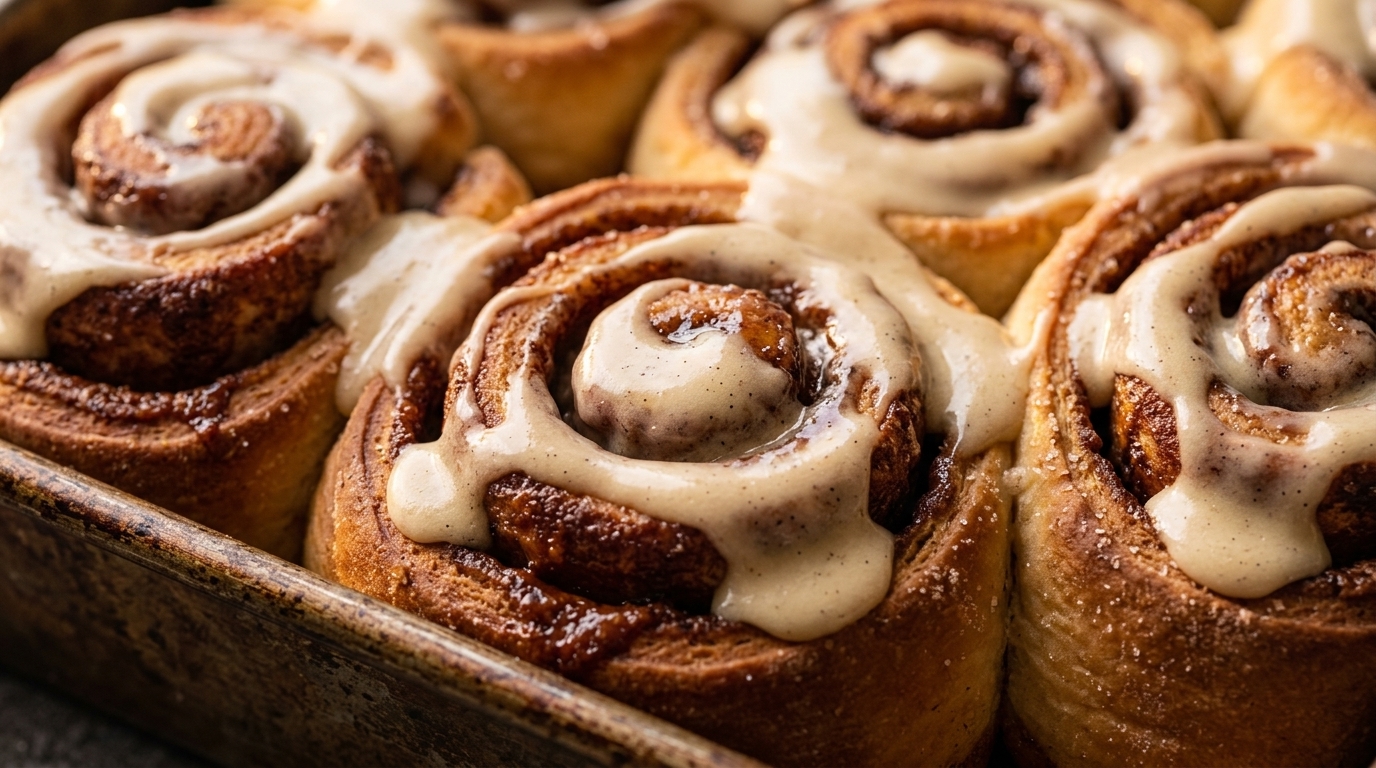
The first time I made cinnamon rolls with the cinnamon I had in my cupboard — the cheap kind, cassia, the kind almost everyone has — they came out of the oven tasting almost bitter around the edges, like the sugar had scorched even though it hadn’t. I swapped in Ceylon cinnamon on a whim the next weekend and the difference was obvious after one bite: milder, a little floral, almost citrusy at the edges. It doesn’t fight with the brown sugar filling, it rounds it out. I’ve made these the same way almost every weekend since.
Why Ceylon Cinnamon Instead of Regular Cinnamon?
Most cinnamon sold in supermarkets — including most pre-ground jars simply labeled “cinnamon” — is cassia, not Ceylon. They’re related but genuinely different spices:
- Flavor: Cassia is sharper and more intense; Ceylon is softer, sweeter, with a faint citrus note.
- Texture when ground: Ceylon is papery and light, made from thin inner bark layers rolled together; cassia is one thick, hard bark.
- Coumarin content: Ceylon contains only trace amounts of coumarin, a compound that can stress the liver in large, regular doses. Cassia contains much more. If you bake with cinnamon often, this is worth knowing — it’s part of why Ceylon is sometimes called “true cinnamon.”
For a recipe like this one, where cinnamon is the whole point of the filling, the difference is easy to taste — not subtle at all.
Ceylon Cinnamon Rolls Recipe
Prep time: 30 minutes | Rise time: 2 hours 15 minutes | Cook time: 25 minutes | Total time: ~3 hours | Yield: 12 rolls
Ingredients
For the dough:
- 240 ml (1 cup) whole milk, warmed to 110°F
- 2¼ tsp active dry yeast (1 standard packet)
- 75 g (⅓ cup) granulated sugar, divided
- 85 g (6 tbsp) unsalted butter, melted, divided
- 2 large eggs
- 500 g (4 cups) all-purpose flour
- 1 tsp fine salt
For the filling:
- 150 g (¾ cup) brown sugar, packed
- 2 tbsp ground Ceylon cinnamon
For the glaze:
- 115 g (4 oz) cream cheese, softened
- 150 g (1¼ cups) powdered sugar
- 2 tbsp milk
- ¼ tsp ground Ceylon cinnamon (optional)
Instructions
- Activate the yeast. Combine the warm milk, yeast, and 1 tbsp of the sugar in a bowl. Let sit about 10 minutes, until foamy.
- Mix the dough. Whisk in half the melted butter and the eggs. Add the flour, remaining sugar, and salt. Mix until a soft dough forms, then knead until smooth and elastic (by hand or stand mixer, about 8 minutes).
- First rise. Place the dough in a greased bowl, cover, and let rise in a warm spot until doubled — about 90 minutes.
- Roll out and fill. Punch down the dough and roll into a 16×12-inch rectangle. Brush with the remaining melted butter. Mix the brown sugar and Ceylon cinnamon together and sprinkle evenly over the surface.
- Shape the rolls. Roll the dough tightly into a log from the long edge, pinching the seam to seal. Slice into 12 even rolls using dental floss or a sharp serrated knife. Place in a greased 9×13-inch baking pan.
- Second rise. Cover the pan and let the rolls rise again until puffy and touching, about 45 minutes.
- Bake. Bake at 350°F (175°C) for 22–25 minutes, until golden brown on top and cooked through.
- Make the glaze. While the rolls bake, beat the cream cheese until smooth, then whisk in the powdered sugar, milk, and optional cinnamon until pourable.
- Glaze and serve. Let the rolls cool 10 minutes, then spread the glaze generously over the warm rolls before serving.
Notes: Make-ahead option — assemble through step 5, cover, and refrigerate overnight. Let come to room temperature for 30 minutes before starting the second rise.
Common Mistakes (and How to Avoid Them)
- Rolls came out dense. Usually the yeast didn’t activate — milk too hot (over 115°F kills yeast) or too cold (yeast stays dormant). Aim for warm-bath temperature.
- Filling leaked out during baking. Roll the log tightly and pinch the seam closed. A loose roll unravels in the oven.
- Rolls didn’t rise enough. Kitchen too cold. Warm the oven for 1 minute, turn it off, and let the covered dough rise inside with the oven light on.
- Glaze turned grainy. Sift the powdered sugar first if it’s clumped from sitting in the pantry.
Storage and Reheating
Cooled, unglazed rolls keep at room temperature in an airtight container for 2 days, or in the fridge for 5. Glaze just before serving rather than in advance if storing. To reheat, 15 seconds in the microwave brings a single roll back to soft, fresh-baked texture — better than the oven, which dries them out.
To freeze: freeze the shaped, unbaked rolls after step 5 (before the second rise) on a tray, then transfer to a bag once solid. Thaw and rise on the counter for a few hours the morning you want them, then bake as directed.
Frequently Asked Questions
Can I make Ceylon cinnamon rolls without eggs? Yes — replace the 2 eggs with ¼ cup unsweetened applesauce or a flax egg (1 tbsp ground flaxseed + 3 tbsp water per egg, rested 5 minutes). Slightly less rich, still soft.
Why did my dough not rise at all? Almost always the yeast. Check the expiration date, and make sure your milk was warm, not hot — above about 115°F (46°C) kills active dry yeast before it starts working.
Can I use Ceylon cinnamon sticks instead of ground? Not for this recipe — the filling needs ground cinnamon to distribute evenly through the sugar layer. Grind your own from sticks in a spice grinder if that’s what you have.
Is Ceylon cinnamon worth the extra cost for baking? For a recipe where cinnamon is the star flavor — like these rolls, or cinnamon tea — most people can taste the difference. For recipes where it’s a background note among many spices, it matters less.