
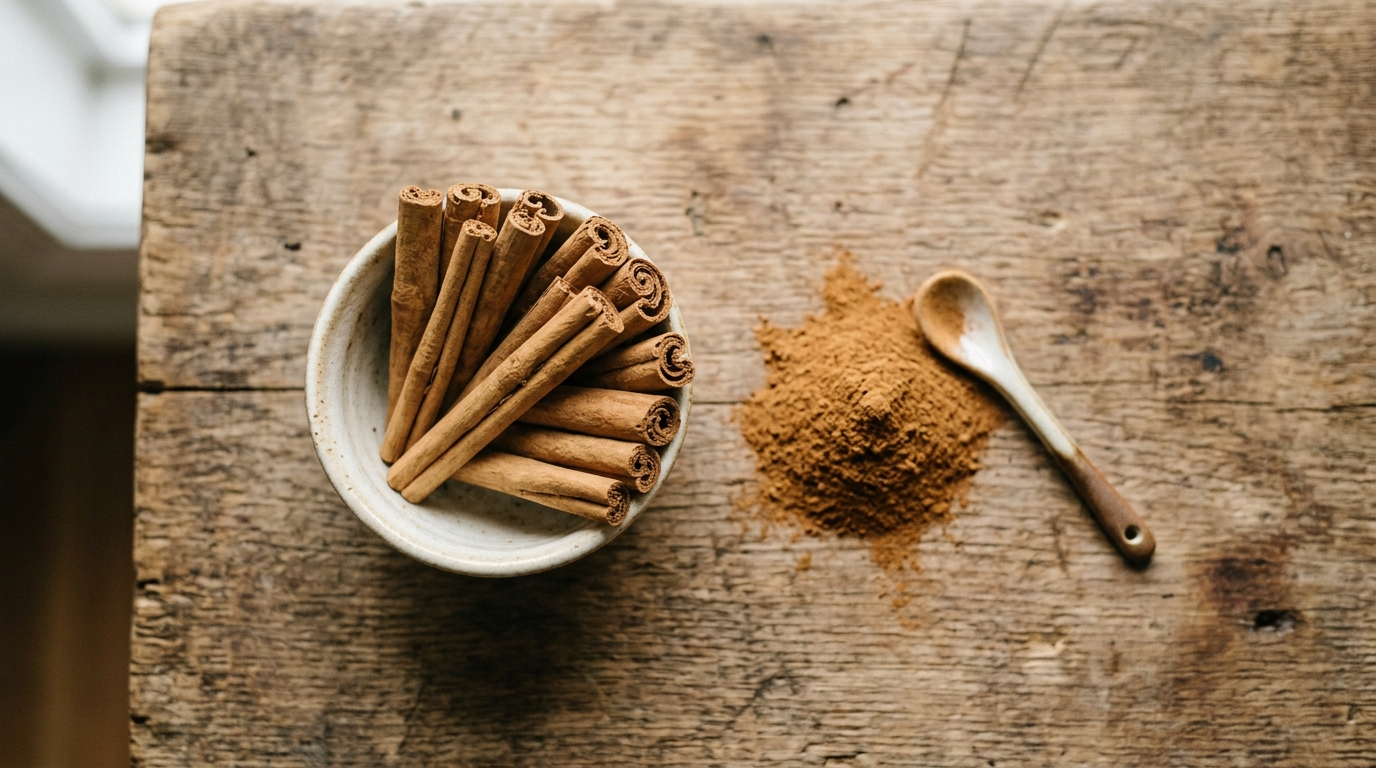
If you’re standing in front of two jars of Ceylon cinnamon, one full of rolled sticks and one full of fine powder, the choice isn’t really about which one is “better.” Both come from the same bark. The difference is what happens to that bark after it’s dried and how that affects freshness, convenience, and how you plan to use it.
This guide breaks down the practical differences so you can decide which form fits how you actually cook, drink tea, or bake.
Sticks and Powder Are the Same Cinnamon, Different Forms
Ceylon cinnamon sticks, often called quills, are made by peeling thin layers of inner bark and rolling them by hand while they’re still soft. As they dry, several thin layers curl together into one stick made of many delicate layers — this is why real Ceylon cinnamon sticks look soft and papery, not like a single thick tube of bark.
Powder is made by grinding those same sticks (or lower-grade pieces of bark) into a fine texture. Nothing is added in a genuine Ceylon cinnamon powder — it’s just ground bark. If a package lists other ingredients or fillers, that’s worth investigating further before buying.
One practical side benefit of sticks: their layered, papery structure is easier to inspect visually, which can help when confirming a stick is real Ceylon cinnamon and not cassia. Powder gives you fewer visual clues, since grinding removes the shape that distinguishes Ceylon cinnamon from cassia.
The Real Difference: Freshness and How Long It Lasts
Whole Ceylon cinnamon sticks generally hold their flavor and aroma longer than powder because grinding exposes far more surface area to air, light, and moisture.
Why whole sticks hold their aroma longer
Cinnamon’s flavor comes from essential oils trapped inside the bark. A whole stick keeps most of that oil sealed inside its layers. Air can only reach the outer surface, so the oils inside stay protected. This is why a stick bought a year ago can still smell strong when you break it.
Why powder loses strength faster
Grinding cinnamon breaks the bark into tiny particles, and each particle is now fully exposed to air. The essential oils start evaporating almost immediately. This doesn’t mean powder goes “bad” in a way that makes it unsafe, but it does lose potency. A jar of Ceylon cinnamon powder that smelled strong when opened can turn noticeably milder within a few months if it isn’t stored well.
If you buy cinnamon rarely and want it to still taste strong months later, sticks are the safer buy.
Flavor and Aroma in Cooking
In cooked dishes, fresh powder and freshly ground sticks taste almost identical, since heat releases the oils either way. The difference shows up over time. Pre-ground powder that’s been sitting on a store shelf for months will always taste weaker than a stick you grind yourself right before cooking.
For dishes where cinnamon is the dominant flavor, such as rice pudding, spiced cakes, or a cinnamon-forward curry, fresher and stronger cinnamon makes a noticeable difference. For dishes where cinnamon is one of several spices, a slightly milder powder is less likely to be noticed.
Ceylon Cinnamon Sticks vs. Powder — Quick Comparison Table
| Factor | Sticks (Quills) | Powder |
|---|---|---|
| Shelf life | Longer, often 2–3 years if stored well | Shorter, best used within 6–12 months |
| Convenience | Needs grinding or steeping time | Ready to use immediately |
| Best for | Tea, broths, slow-cooked dishes, infusions | Baking, spice blends, quick recipes |
| Authenticity check | Easier to inspect visually | Harder to verify by sight |
| Price per use | Often better value over time | Convenient but can be used up faster |
| Storage sensitivity | Less sensitive to air exposure | More sensitive, needs airtight container |
When Sticks Make More Sense
Sticks are the better buy if you:
- Use cinnamon occasionally rather than daily, since a stick keeps its strength while sitting in the cupboard.
- Make tea, mulled wine, or infused drinks, where a stick can steep and be removed easily.
- Cook slow dishes like broths, stews, or rice dishes where a whole stick can simmer and be pulled out before serving.
- Want an easier way to confirm you’re actually getting Ceylon cinnamon and not a cassia substitute.
When Powder Makes More Sense
Powder is the better buy if you:
- Bake regularly and need cinnamon that blends evenly into batter or dough.
- Use cinnamon in spice mixes, smoothies, or oatmeal where a stick isn’t practical.
- Want convenience over long-term shelf life and are likely to finish the jar within a few months.
- Already know how to spot genuine Ceylon cinnamon powder before buying, since powder is more commonly mixed with cassia or fillers than whole sticks.
Using Ceylon Cinnamon Sticks in Tea and Drinks
A single Ceylon cinnamon stick is usually enough for one to two cups of tea. Simmering it gently for 10–15 minutes draws out more flavor than just steeping it in hot water, since the oils release more slowly at a lower simmer. Some people reuse a stick for a second cup, though the flavor will be noticeably weaker the second time.
Ceylon cinnamon sticks tend to give a softer, slightly sweeter flavor in tea compared to cassia, which can taste sharper and more intense. If a tea recipe calls for “a cinnamon stick” without specifying quantity, one Ceylon stick per 2 cups of liquid is a reasonable starting point.
Grinding Ceylon Cinnamon Sticks at Home
Because Ceylon cinnamon sticks are made of thin, papery layers rather than one hard piece of bark, they grind more easily than cassia sticks. A spice grinder, coffee grinder dedicated to spices, or even a mortar and pestle can turn a stick into powder in under a minute.
Grinding your own cinnamon right before using it gives you the convenience of powder with closer-to-fresh flavor, though it does take a few extra minutes compared to opening a jar of pre-ground powder.
How to Store Both Forms Properly
Both forms benefit from the same basic conditions: an airtight container, away from direct light, in a cool spot away from the stove or oven. Heat and light break down the essential oils faster than almost anything else.
Powder should be used within 6 to 12 months for the best flavor. Sticks can often stay flavorful for 2 to 3 years if kept sealed and dry, though they won’t last forever either. If a stick no longer smells like cinnamon when you snap it in half, it’s past its useful life even if it still looks fine.
So Which Should You Buy?
If you had to pick one for a pantry that needs to last, sticks are the more forgiving choice. If your cooking depends on convenience and you go through cinnamon quickly, powder works well as long as you buy in amounts you’ll actually use within a year. Many people who cook and drink tea regularly end up keeping both: sticks for infusions and slow dishes, powder for baking and quick meals.
FAQ
Can you substitute Ceylon cinnamon sticks for powder in a recipe? Yes, but you’ll need to grind the stick first for most baking recipes. As a rough guide, one 3-inch Ceylon cinnamon stick ground down produces about half a teaspoon of powder, though this varies by stick size and thickness.
Does Ceylon cinnamon powder go bad? It doesn’t spoil in a way that makes it unsafe to eat, but it loses aroma and flavor strength over time, especially if stored in a warm spot or left open to air.
Is it cheaper to buy sticks or powder? This depends on the seller and quantity, but sticks often work out to better value over time since less is wasted to spoilage or lost potency. Powder can be cheaper upfront but may need replacing sooner if it loses flavor.
Can you reuse a cinnamon stick after boiling it in tea? You can, though the second use will taste noticeably milder. Many people use a stick once for a strong cup and a second time for a lighter one, then discard it.
Do Ceylon cinnamon sticks need to be refrigerated? No. A cool, dry cupboard away from heat and light is enough. Refrigeration can introduce moisture, which is worse for the sticks than room temperature storage