
CINNELON · Ceylon Cinnamon Basics · 8 min read
If you’ve ever picked up a jar of cinnamon at the grocery store and wondered whether it’s the “real” kind — you’re not alone. Most people have no idea there are two very different types of cinnamon sold under the same name. One is Ceylon cinnamon, and the other is cassia. They look similar, they smell similar, but they are not the same thing.
This guide breaks down exactly what Ceylon cinnamon is, where it comes from, how it’s different from what’s commonly sold in stores, and how to spot the real thing.
| QUICK ANSWER Ceylon cinnamon (also called “true cinnamon”) is a spice made from the inner bark of the Cinnamomum verum tree, grown mainly in Sri Lanka. It has a lighter color, a softer and more delicate flavor, and a flaky multi-layered stick — unlike the harder, darker cassia cinnamon most people are familiar with. Ceylon is considered the original, higher-quality form of cinnamon. |
Where does Ceylon cinnamon come from?
Ceylon is the old colonial name for Sri Lanka, the island nation off the southern tip of India. For centuries, Sri Lanka has been the world’s primary source of true cinnamon — and that’s still the case today.
The southwestern coastal regions of Sri Lanka, particularly around Galle, Matara, and Kalutara, are where most Ceylon cinnamon is grown. The tropical climate, rich soil, and generations of farming knowledge make this region uniquely suited to producing it.
Ceylon cinnamon is also grown in small amounts in Madagascar, the Seychelles, and parts of South America — but Sri Lankan Ceylon is widely regarded as the standard.
| Scientific name Cinnamomum verum | Primary origin Sri Lanka | Also known as True cinnamon | Stick texture Soft, multi-layered |
Ceylon cinnamon vs. cassia: what’s the difference?
This is the most important distinction to understand — and most people have never heard it.
| Ceylon cinnamon (true cinnamon) | Cassia cinnamon (common) | |
| Color | Pale tan / light brown | Dark reddish-brown |
| Stick texture | Soft, multi-layered, crumbles easily | Hard, hollow, single-wall |
| Flavor | Delicate, mildly sweet, floral | Bold, spicy, sharp |
| Coumarin | Very low | High |
| Origin | Mainly Sri Lanka | China, Vietnam, Indonesia |
| Price | Higher cost | Cheap, widely available |
When a recipe calls for “cinnamon,” it almost always means cassia — because that’s what fills most spice racks worldwide. Ceylon is the less common but more refined option.
| Worth knowing: Coumarin is a naturally occurring compound found in high amounts in cassia cinnamon. Ceylon cinnamon contains very little of it. This isn’t a medical claim — just a factual difference that many buyers want to understand when choosing between the two. |
How is Ceylon cinnamon made?
Ceylon cinnamon production is one of the most labor-intensive spice processes in the world — and it’s done almost entirely by hand.
The harvesting process
Cinnamon farmers in Sri Lanka (called chalias) cut young branches from the cinnamon tree and carefully peel away the outer bark. Then, using a curved knife, they scrape and separate the thin inner bark — the part that becomes the cinnamon you use.
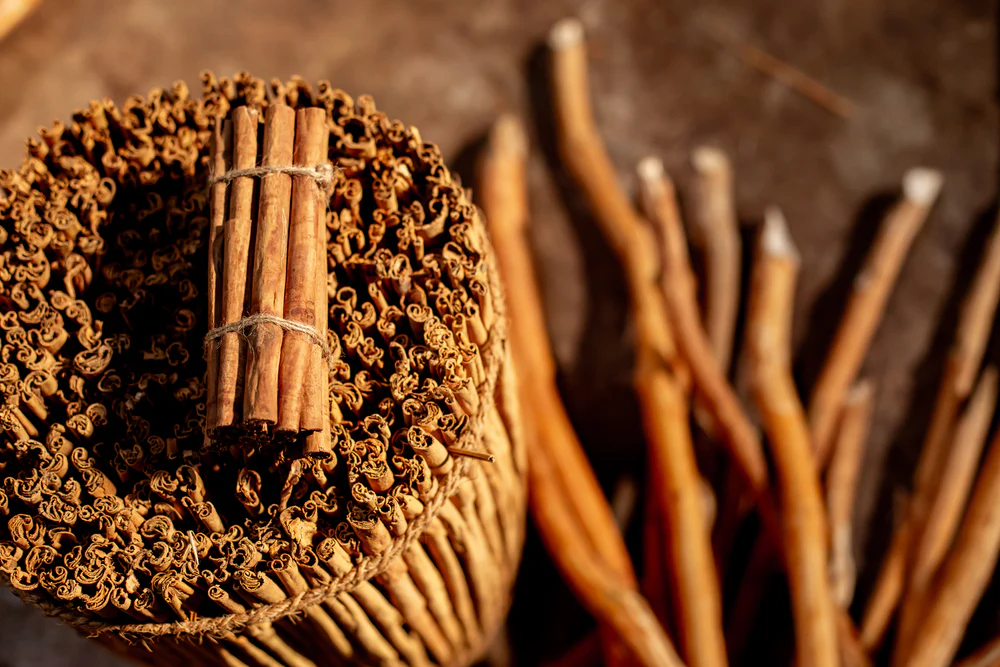
These strips of inner bark are then rolled together by hand into the distinctive tight rolls you see in Ceylon cinnamon sticks. As they dry, the layers curl inward naturally, creating that soft, flaky, cigar-like stick.
Why the stick looks different
This multi-layer rolling process is what sets Ceylon sticks apart visually. Cassia sticks, by contrast, are made from thicker bark and form a single hollow curl — like a scroll. Ceylon sticks are thinner, lighter, and will crumble easily if you press them. Cassia sticks are hard and won’t break without effort.
| Tip: Press your thumbnail into the cinnamon stick. If it dents easily and the layers separate like rolled paper, it’s likely Ceylon. If it feels like wood and doesn’t give, it’s cassia. |
What does Ceylon cinnamon taste like?
Ceylon cinnamon has a noticeably lighter, more floral flavor than cassia. It’s mildly sweet with a gentle warmth — nowhere near as sharp or “spicy” as the cinnamon most people grew up with.
If you’ve only ever used grocery store cinnamon, the flavor difference can actually be surprising. Ceylon is more subtle, more complex, and some describe it as slightly citrusy or almost tea-like.
Because of its milder flavor, Ceylon works beautifully in:
- Desserts where you want warmth without overpowering spice (custards, rice pudding, light cakes)
- Hot drinks like teas, golden milk, or chai
- Savory dishes where cinnamon plays a supporting role
- Anything where you’re using a lot of cinnamon and don’t want it to dominate
Common mistakes when buying Ceylon cinnamon
Trusting the label alone
One of the most common frustrations buyers have is purchasing something labeled “Ceylon cinnamon” only to receive what looks and tastes like ordinary cassia. Labeling standards vary by country, and not all sellers are careful about this distinction.
Buying ground Ceylon without verifying the source
Ground cinnamon is harder to verify because you can’t inspect the stick. If you’re buying ground Ceylon, look for a seller who specifies the origin (Sri Lanka), ideally with a certificate or quality documentation.
Assuming all light-colored cinnamon is Ceylon
Color can help, but it’s not foolproof. Always combine the color check with a stick texture check — and buy from a trustworthy source.
How to identify real Ceylon cinnamon
Here are the most reliable things to look for when buying or checking cinnamon:
- Color: Color: Pale tan or light brown (not reddish-dark)
- Stick texture: Stick texture: Soft, multi-layered, crumbles easily — like rolled parchment
- Smell: Smell: Lighter, sweeter, less sharp than cassia
- Origin label: Origin label: “Product of Sri Lanka” is a strong indicator
- Scientific name: Scientific name: Look for Cinnamomum verum or Cinnamomum zeylanicum on the packaging
- Price: Price: Real Ceylon costs more than regular grocery store cinnamon — if it’s very cheap, that’s a red flag
How to use Ceylon cinnamon
Because Ceylon is softer, it’s actually easier to work with in some ways — the sticks can be ground fresh at home using a regular spice grinder or even a mortar and pestle.
For everyday use:
- Add a whole stick to simmering oatmeal, rice, or stews and remove before serving
- Grind sticks fresh and use in baking — the flavor is best when freshly ground
- Stir ground Ceylon into coffee, tea, or warm milk
- Use it anywhere you’d normally use cinnamon, and simply adjust the amount to taste (you may need a little more since the flavor is milder)
| Tip: Keep Ceylon cinnamon in an airtight container away from heat and direct light. Whole sticks stay fresh for 2–3 years; ground Ceylon is best used within 6–12 months for peak flavor. |
A quick note on Sri Lanka and cinnamon culture
Cinnamon has been part of Sri Lankan life for over 2,000 years. Portuguese traders arrived in the 1500s specifically because of it. The Dutch later monopolized its trade. The British eventually opened it to global markets. That history is baked into the spice itself.
Today, Sri Lanka produces around 80–90% of the world’s Ceylon cinnamon. Many farms are still family-run, passing down the traditional harvesting and rolling methods through generations. When you buy real Ceylon cinnamon from Sri Lanka, you’re buying from that living tradition.
Summary
Ceylon cinnamon is the original, true form of cinnamon — grown from the Cinnamomum verum tree, primarily in Sri Lanka. It has a lighter color, a softer stick, a more delicate flavor, and a very different profile from the cassia cinnamon that dominates most supermarket shelves.
Knowing the difference lets you buy smarter, cook better, and understand exactly what you’re putting in your food. If you’ve never tried real Ceylon, it’s worth the experience.
Frequently asked questions
Is Ceylon cinnamon the same as regular cinnamon?
No. What most people call “regular cinnamon” is cassia — a different species. Ceylon cinnamon comes from the Cinnamomum verum tree and has a noticeably different taste, texture, and appearance. Both are sold simply as “cinnamon,” which creates a lot of confusion.
Why is Ceylon cinnamon more expensive?
The harvesting process is almost entirely manual and very skill-intensive. Sri Lankan farmers carefully peel and roll the bark by hand, which takes significantly more labor than machine-processed cassia. That, combined with lower overall supply, pushes the price up.
Can I use Ceylon cinnamon the same way as regular cinnamon in recipes?
Yes, in most cases. The main adjustment is that Ceylon has a milder flavor, so you might want to use a slightly larger amount if you’re used to the stronger taste of cassia. For drinks and delicate desserts, Ceylon is often preferred.
Where is the best Ceylon cinnamon from?
Sri Lanka is the gold standard. The southwestern coastal regions of the island — particularly Galle and surrounding areas — have the ideal climate and centuries of expertise. Look for packaging that says “Product of Sri Lanka” when buying.
How do I know if my cinnamon is really Ceylon?
Check three things: the color (pale tan, not dark reddish-brown), the stick texture (soft, multi-layered, crumbles easily), and the label (look for Cinnamomum verum or “Sri Lanka” as the origin). Buying from a trusted, specialist source is the most reliable way.
Written for Cinnelon · Real Ceylon cinnamon, straight from Sri Lanka