
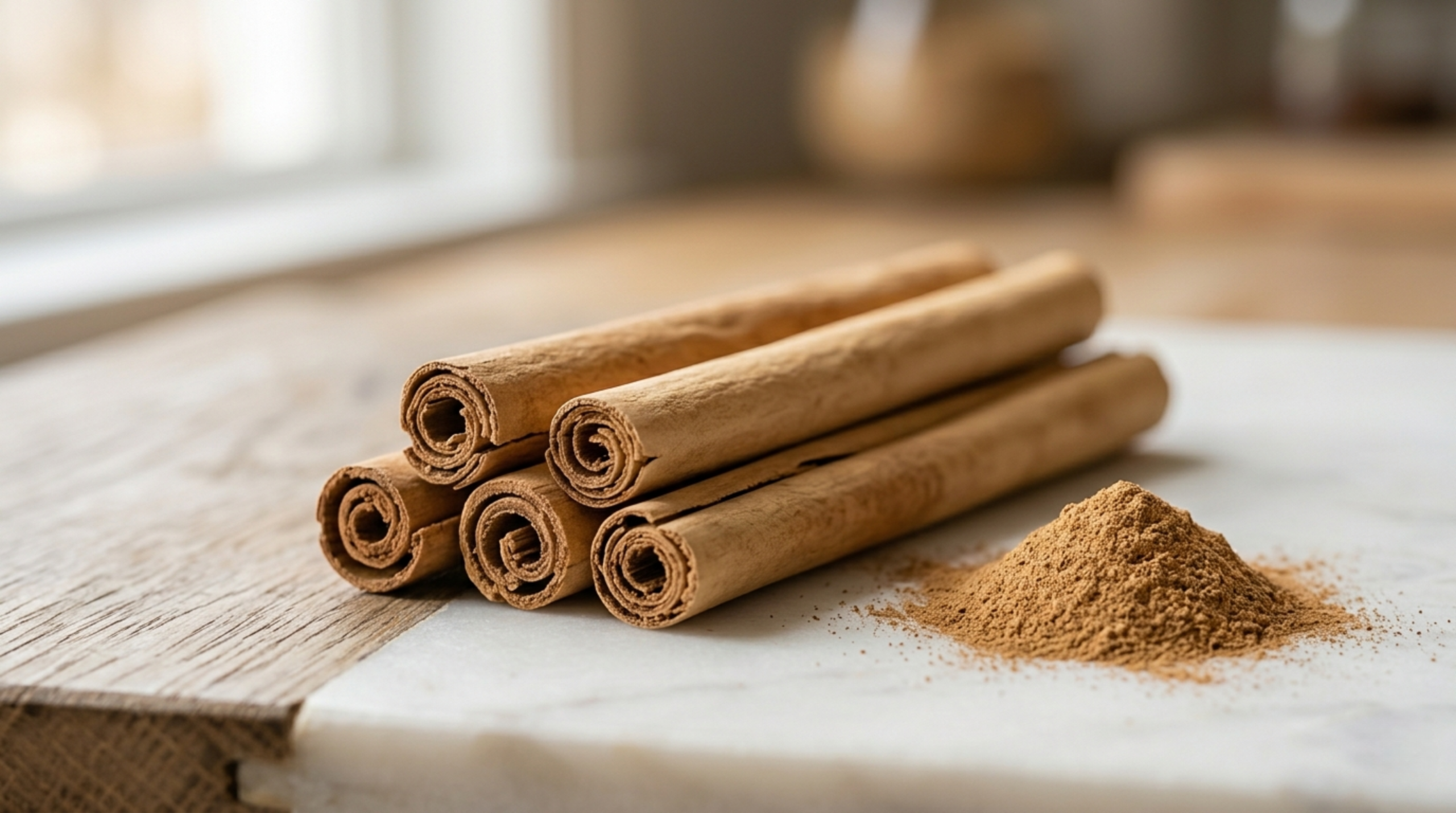
Quick answer: The “cinnamon” in most kitchen cupboards is Cassia — not true cinnamon. Ceylon cinnamon contains up to 350 times less of a liver-toxic compound called coumarin, making it the only type considered safe for daily use. Read on to find out exactly why this matters, how to tell them apart, and which one belongs in your recipes.
Table of Contents
- What Is Ceylon Cinnamon?
- What Is Cassia Cinnamon?
- The Coumarin Problem: Why This Matters for Your Health
- Ceylon vs Cassia: Full Comparison Table
- How to Tell Them Apart (3 Simple Tests)
- Which Is Better for Cooking and Baking?
- How Much Can You Safely Eat Per Day?
- Who Should Be Extra Careful?
- 3 Easy Ceylon Cinnamon Recipes to Try Today
- Frequently Asked Questions
What Is Ceylon Cinnamon? {#what-is-ceylon-cinnamon}
Ceylon cinnamon — scientifically known as Cinnamomum verum — is the original “true cinnamon.” It comes from the inner bark of a tree native to Sri Lanka (formerly called Ceylon), and that is exactly where its name comes from.
Sri Lanka still produces around 80% of the world’s Ceylon cinnamon today, using traditional harvesting methods passed down for generations. Farmers hand-peel thin strips of bark from young cinnamon branches, which are then sun-dried and rolled into the delicate, multi-layered quills you may have seen.
What sets Ceylon cinnamon apart visually is those thin, papery layers. The sticks look like tightly rolled cigars made of tissue paper — soft enough to crumble between your fingers, light tan in color, and with a mild, sweet, almost floral aroma. There is none of the sharp bite you might expect from regular supermarket cinnamon.
From a flavor perspective, Ceylon cinnamon is noticeably more subtle and slightly sweeter. It has citrus undertones that Cassia does not have. This makes it ideal for dishes where you want warmth without overpowering other flavors.
What Is Cassia Cinnamon? {#what-is-cassia-cinnamon}
Cassia cinnamon is the variety almost everyone has in their pantry right now — even if the label just says “cinnamon.” It comes from a different species of tree, Cinnamomum cassia, grown mainly in China, Vietnam, and Indonesia.
If you pick up a cinnamon stick at most grocery stores, it will be a single thick roll of dark reddish-brown bark — hard to break, with a hollow center. That is Cassia. The flavor is bold, sharp, and spicy: the familiar punch you associate with cinnamon rolls, mulled wine, and holiday baking.
Cassia dominates the global market simply because it is cheaper and easier to grow than Ceylon. In the United States alone, roughly 90% of all cinnamon sold in supermarkets is Cassia. The FDA currently allows it to be labeled simply as “cinnamon” — no distinction required — which is why so many people have never heard of Ceylon at all.
There are actually several types of Cassia cinnamon: Chinese cassia, Indonesian cassia (often called Korintje), and Vietnamese cinnamon (also called Saigon cinnamon). Of these, Saigon cinnamon has the strongest flavor and, as you will see, also the highest levels of a potentially harmful compound.
The Coumarin Problem: Why This Matters for Your Health {#the-coumarin-problem}
This is where the differences between Ceylon and Cassia cinnamon stop being about taste and start being about safety.
Cassia cinnamon contains high levels of coumarin — a naturally occurring chemical compound that the plant uses as a defense mechanism against insects. In small amounts, coumarin is harmless. At higher doses, or with prolonged daily intake, it can cause liver damage.
Here is how the numbers break down:
- Cassia cinnamon contains between 2,000 and 7,000 mg of coumarin per kilogram (roughly 2–7% by weight)
- Ceylon cinnamon contains only 4 to 20 mg per kilogram (roughly 0.004–0.02% by weight)
That is a difference of up to 350 times more coumarin in Cassia than in Ceylon.
The European Food Safety Authority (EFSA) has set a Tolerable Daily Intake (TDI) for coumarin at 0.1 mg per kilogram of body weight per day. For an average 70 kg (154 lb) adult, that works out to just 7 mg of coumarin per day.
One teaspoon of ground Cassia cinnamon can contain up to 18 mg of coumarin — more than double that safe daily limit in a single serving. One teaspoon of Ceylon cinnamon, by contrast, contains less than 0.1 mg.
A peer-reviewed study published in npj Science of Food (2025) analyzed 104 commercially available cinnamon samples from EU retailers. It found that 66.3% of samples either did not meet quality standards, exceeded coumarin safety limits, or showed signs of fraud. Many were toxic for children based on their coumarin content alone.
The German Federal Institute for Risk Assessment (BfR) has previously issued formal warnings about Cassia cinnamon, particularly for regular consumers and children. Germany even banned Cassia from school meals following reports of liver enzyme elevation linked to daily use.
For most people sprinkling cinnamon on oatmeal once a week, Cassia is not a crisis. But if you are adding cinnamon to your coffee every morning, baking with it regularly, or — more critically — taking it as a health supplement to manage blood sugar, the type of cinnamon you use matters enormously.
Ceylon vs Cassia: Full Comparison Table {#comparison-table}
| Feature | Ceylon Cinnamon | Cassia Cinnamon |
|---|---|---|
| Scientific name | Cinnamomum verum | Cinnamomum cassia / aromaticum |
| Origin | Sri Lanka | China, Vietnam, Indonesia |
| Also called | True cinnamon | Regular/common cinnamon |
| Coumarin content | 4–20 mg/kg (trace) | 2,000–7,000 mg/kg (high) |
| Safe for daily use? | Yes | Only in very small amounts |
| Color (ground) | Light tan | Dark reddish-brown |
| Stick appearance | Thin, multi-layered, soft | Thick, single-rolled, hard |
| Flavor | Mild, sweet, citrusy | Bold, spicy, pungent |
| Price | Higher | Lower |
| Best for | Daily use, health recipes, teas | Occasional baking, spice blends |
| Marketed as “cinnamon”? | Sometimes | Almost always |
How to Tell Them Apart (3 Simple Tests) {#how-to-tell-them-apart}
You do not need a laboratory to figure out what kind of cinnamon you have. These three tests work in your kitchen right now.
Test 1: Look at the sticks
Ceylon cinnamon sticks are made of many thin, brittle layers wrapped tightly together — they look like a rolled-up cigar made of parchment paper. You can crumble them with your fingers. Cassia sticks are a single thick roll of hard bark with a hollow center, and they will not break easily by hand.
Test 2: Check the color of the powder
Ground Ceylon cinnamon is a light, warm tan — similar to the color of dry sand. Ground Cassia is noticeably darker, with a reddish-brown hue. If your cinnamon powder is deep brown with a reddish tinge, it is almost certainly Cassia.
Test 3: Read the label carefully
Look for the words “Ceylon,” “True Cinnamon,” or the botanical name “Cinnamomum verum” on the packaging. If it only says “cinnamon” with no further detail, assume it is Cassia. Reputable Ceylon cinnamon brands will also state the country of origin as Sri Lanka.
Which Is Better for Cooking and Baking? {#which-is-better-for-cooking}
For everyday cooking and daily recipes: Ceylon wins. Its lighter flavor blends seamlessly into drinks, porridge, smoothies, and savory dishes without dominating. It is the natural choice for any recipe where you want warmth in the background, not a sharp spice hit in the foreground.
For bold, spice-heavy baking: Cassia can work, occasionally. If you are making gingerbread, a spice cake, or a recipe that calls for a powerful cinnamon punch, Cassia’s intensity is actually a feature. Just keep it occasional rather than daily.
One practical note: because Ceylon is milder than Cassia, you may need to use slightly more of it to achieve the same flavor impact. A good rule of thumb is to use 1.5 teaspoons of Ceylon wherever a recipe calls for 1 teaspoon of Cassia.
How Much Can You Safely Eat Per Day? {#safe-daily-amounts}
Based on the EFSA coumarin guidelines for a 70 kg adult:
Ceylon cinnamon: Up to 1.5 teaspoons (roughly 4.5 grams) per day is considered safe for most healthy adults. You would need to consume over 100 teaspoons of Ceylon in a single day to approach its coumarin limit — that is simply not going to happen.
Cassia cinnamon: No more than half a teaspoon (roughly 1.5 grams) per day for long-term use. A 2023 EFSA analysis found that even moderate daily Cassia use pushes many adults past the safe coumarin threshold.
These numbers apply to healthy adults with no liver conditions. For children, the limits are significantly lower because of lower body weight.
Who Should Be Extra Careful? {#who-should-be-careful}
Children. Lower body weight means lower coumarin tolerance. Multiple studies have flagged commercially sold cinnamon as potentially toxic for children at amounts adults consider normal.
People with liver conditions. Coumarin is metabolized by the liver. Anyone with existing liver disease, elevated liver enzymes, or a history of hepatitis should avoid regular Cassia use entirely and consult a doctor before using any cinnamon supplement.
People taking blood thinners. Coumarin is chemically related to warfarin (a common anticoagulant medication). Combining high-coumarin Cassia with blood thinners like warfarin can increase bleeding risk. Ceylon cinnamon’s negligible coumarin content makes it a far safer choice in this situation.
Anyone using cinnamon as a health supplement. The clinical studies that show cinnamon’s benefits for blood sugar typically use doses of 1–6 grams per day. At 6 grams daily, Cassia cinnamon delivers up to 42–108 mg of coumarin — between 6 and 15 times the safe daily limit. At the same dose, Ceylon delivers under 0.2 mg. If you are using cinnamon therapeutically, Ceylon is the only practical choice.
3 Easy Ceylon Cinnamon Recipes to Try Today {#recipes}
Now that you know why Ceylon cinnamon is the smarter choice, here are three simple recipes to put it to use straight away.
Recipe 1: Ceylon Cinnamon Morning Tea
A warming, low-effort daily ritual that takes under five minutes to prepare.
Ingredients:
- 1 Ceylon cinnamon stick (or ½ tsp ground Ceylon cinnamon)
- 250 ml (1 cup) boiling water
- 1 tsp raw honey
- A squeeze of fresh lemon juice
- Optional: a thin slice of fresh ginger
Method: Place the cinnamon stick in a mug and pour over boiling water. Let it steep for 5–8 minutes. Remove the stick, add honey and lemon juice, stir, and enjoy. If using ground cinnamon, stir it directly into the water and drink without straining.
Why it works: This is one of the simplest ways to incorporate Ceylon cinnamon into your daily routine. The warm infusion releases cinnamaldehyde — the active compound responsible for cinnamon’s blood sugar and antioxidant benefits — without any added sugar or calories.
Recipe 2: Ceylon Cinnamon Overnight Oats
Prepare this the night before and wake up to a ready-made, nourishing breakfast.
Ingredients (1 serving):
- 80 g (¾ cup) rolled oats
- 240 ml (1 cup) milk of choice (dairy, oat, or almond)
- 1 tsp ground Ceylon cinnamon
- 1 tbsp chia seeds
- 1 tbsp maple syrup or honey
- 1 tsp vanilla extract
- Toppings: sliced banana, chopped walnuts, or fresh berries
Method: Combine oats, milk, Ceylon cinnamon, chia seeds, sweetener, and vanilla in a jar or container. Stir well, seal, and refrigerate overnight. In the morning, add your toppings and eat cold or briefly warmed.
Why it works: Overnight oats with Ceylon cinnamon hit multiple goals at once — fiber from the oats, omega-3s from the chia seeds, and the blood sugar-stabilizing effect of true cinnamon’s cinnamaldehyde. It is one of the most popular breakfast recipes in the Ceylon cinnamon niche for good reason.
Recipe 3: Ceylon Cinnamon Honey Glazed Sweet Potatoes
A simple, naturally sweet side dish that proves Ceylon cinnamon belongs in savory cooking too.
Ingredients (2–3 servings):
- 2 medium sweet potatoes, peeled and cut into wedges
- 2 tbsp olive oil
- 1.5 tsp ground Ceylon cinnamon
- 1 tbsp raw honey
- ¼ tsp sea salt
- ¼ tsp black pepper
- Optional: pinch of cayenne for heat
Method: Preheat the oven to 200°C (400°F). Toss sweet potato wedges in olive oil, Ceylon cinnamon, salt, and pepper until evenly coated. Spread in a single layer on a baking tray lined with parchment paper. Roast for 25–30 minutes, flipping once halfway through. Drizzle with honey in the final 5 minutes. Serve warm.
Why it works: Sweet potatoes and cinnamon are one of the most naturally complementary flavor pairings there is. Using Ceylon cinnamon here gives you that warm spice note without any bitterness, and the honey glaze caramelizes beautifully in the oven.
Frequently Asked Questions {#faq}
Is the cinnamon in my supermarket Ceylon or Cassia?
Almost certainly Cassia. Roughly 90% of cinnamon sold in supermarkets globally is Cassia. Unless the label specifically says “Ceylon,” “True Cinnamon,” or “Cinnamomum verum,” assume it is Cassia.
Can I use Ceylon cinnamon in place of Cassia in any recipe?
Yes, with one adjustment: use about 1.5 times the amount, since Ceylon is milder. So if a recipe calls for 1 teaspoon of cinnamon, use 1.5 teaspoons of Ceylon.
Is Ceylon cinnamon safe for children?
Yes, in normal culinary amounts, Ceylon cinnamon is considered safe for children. Its coumarin content is so low that it would take an impractical quantity to reach any level of concern. Cassia, by contrast, should be limited in children’s diets because of higher coumarin levels.
Does Ceylon cinnamon help with blood sugar?
Research suggests that Ceylon cinnamon can help improve insulin sensitivity and reduce fasting blood glucose levels, particularly in people with prediabetes or type 2 diabetes. It is also the only safe form to use at therapeutic doses — Cassia at the same doses delivers dangerously high coumarin levels. Always consult a healthcare professional before using cinnamon as a supplement alongside diabetes medication.
Where can I buy authentic Ceylon cinnamon?
Look for it in health food stores, specialty spice shops, or online. Key things to look for: the label must say “Ceylon” or “Cinnamomum verum,” the origin should be listed as Sri Lanka, and the color of ground cinnamon should be light tan, not reddish-brown.
Does Ceylon cinnamon taste different from regular cinnamon?
Yes. Ceylon has a milder, sweeter flavor with subtle citrus notes. Cassia tastes sharper, spicier, and more pungent. Most people who switch to Ceylon find they enjoy the more nuanced, less overpowering taste — especially in drinks and delicate desserts.
Can I take Ceylon cinnamon as a daily supplement?
Ceylon cinnamon is generally considered safe for daily supplementation because of its negligible coumarin content. However, if you are on any medication — particularly blood thinners or diabetes medication — consult your doctor before starting any cinnamon supplement.
The Bottom Line
The cinnamon debate comes down to one simple fact: they are not the same spice. Ceylon and Cassia come from different species of trees, contain dramatically different levels of coumarin, and carry very different safety profiles for daily use.
If you cook with cinnamon occasionally, Cassia is unlikely to cause any harm. But if you want to add cinnamon to your diet regularly — in your morning tea, on your oatmeal, in your smoothies, or as a supplement — Ceylon cinnamon is the clear, safer, and ultimately smarter choice.
The good news is that Ceylon cinnamon is easier to find than ever, and it will elevate your cooking at the same time as it supports your health. The recipes above are a simple place to start.
Looking for more Ceylon cinnamon recipes? Explore our full recipe collection — from Ceylon cinnamon tea blends to blood sugar-friendly breakfasts and Sri Lankan-inspired dinner dishes.
Keywords targeted: Ceylon cinnamon vs Cassia cinnamon, is cinnamon safe to eat daily, true cinnamon vs regular cinnamon, coumarin in cinnamon, Ceylon cinnamon benefits, how to identify Ceylon cinnamon, Ceylon cinnamon recipes
Internal link suggestions: Ceylon cinnamon tea recipe, Ceylon cinnamon for blood sugar, where to buy Ceylon cinnamon