
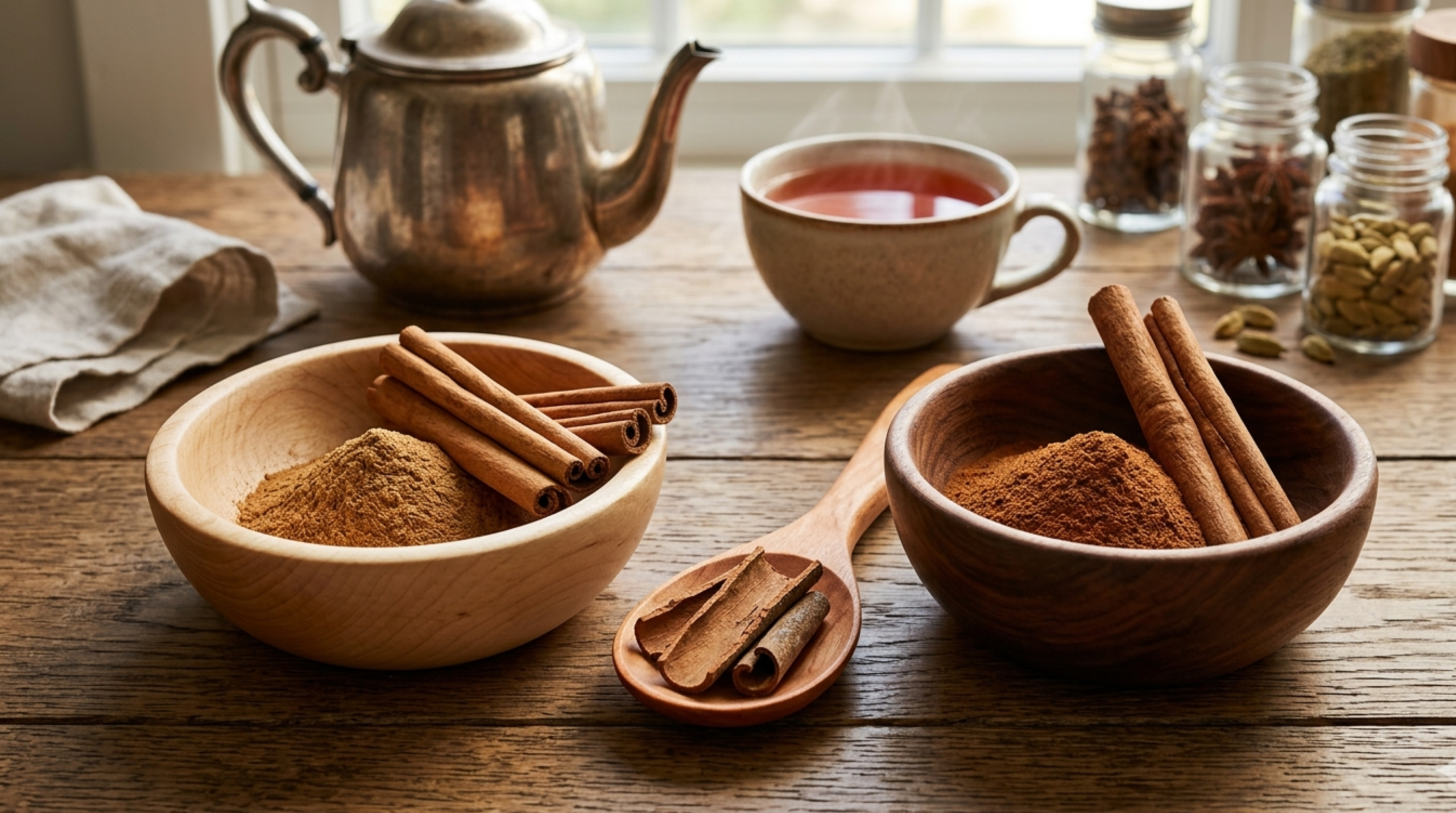
Introduction
Most people think cinnamon is just… cinnamon. But once you look closer, you realize there are two completely different types sold under the same name.
This is where confusion starts.
If you’re buying cinnamon for daily use—tea, coffee, or health reasons—the difference between Ceylon cinnamon vs Cassia cinnamon actually matters. Not in a complicated way, but in a practical, everyday sense.
Let’s make it simple and clear so you know exactly what you’re using.
Quick Answer: Ceylon Cinnamon vs Cassia Cinnamon
- Ceylon cinnamon (true cinnamon)
- From Sri Lanka
- Light color, soft texture
- Mild, slightly sweet taste
- Low in coumarin (better for regular use)
- Cassia cinnamon (common cinnamon)
- From China, Indonesia, Vietnam
- Dark, thick, hard bark
- Strong, spicy flavor
- Higher in coumarin
Simple takeaway:
Ceylon cinnamon is better for daily use. Cassia is stronger and more common in supermarkets.
What Is Ceylon Cinnamon?
Ceylon cinnamon is often called “true cinnamon.” It’s mainly grown in Sri Lanka and has been used there for centuries in cooking and traditional daily routines.
Key characteristics:
- Thin, layered sticks (like rolled paper)
- Light golden-brown color
- Soft and easy to break
- Mild, smooth flavor
Real-world insight
In Sri Lanka, cinnamon isn’t treated like a “special product.” It’s just part of normal life—added to tea, curries, and home cooking in small amounts.
What Is Cassia Cinnamon?
Cassia cinnamon is what most people around the world are actually using—especially in supermarkets.
It comes from several countries and is cheaper to produce.
Key characteristics:
- Thick, hard bark (usually one solid curl)
- Dark reddish-brown color
- Strong, spicy, slightly bitter taste
- More intense smell
Why it’s so common
- Lower cost
- Strong flavor (good for baking)
- Mass production
Ceylon Cinnamon vs Cassia Cinnamon: Side-by-Side Comparison
Appearance
- Ceylon: Thin layers, soft, flaky
- Cassia: Thick, hard, single-layer bark
Color
- Ceylon: Light brown
- Cassia: Dark brown or reddish
Taste
- Ceylon: Mild, slightly sweet
- Cassia: Strong, spicy, sometimes sharp
Texture
- Ceylon: Easy to break by hand
- Cassia: Hard and woody
Origin
- Ceylon: Sri Lanka
- Cassia: China, Indonesia, Vietnam
Price
- Ceylon: More expensive
- Cassia: Cheaper and widely available
The Important Difference: Coumarin Content
This is where the conversation becomes practical.
Cassia cinnamon contains higher levels of coumarin, a natural compound found in some plants.
Why people care:
- High amounts over time are something many prefer to avoid
- Especially if using cinnamon daily
Ceylon cinnamon advantage:
- Very low coumarin levels
- More suitable for regular, long-term use
This is one of the main reasons people switch once they learn the difference.
Which One Should You Use?
It depends on how you use cinnamon.
Choose Ceylon cinnamon if:
- You use cinnamon daily (tea, coffee, food)
- You care about quality and origin
- You want a milder, smoother taste
Choose Cassia cinnamon if:
- You’re baking occasionally
- You want a strong cinnamon flavor
- Budget is your main concern
There’s no “right” or “wrong”—just different use cases.
Taste Difference (What You’ll Actually Notice)
This part is often overlooked.
Ceylon cinnamon:
- Light, warm, slightly sweet
- Doesn’t overpower drinks or food
- Blends smoothly
Cassia cinnamon:
- Bold and intense
- Dominates the flavor
- Can feel slightly harsh in drinks
If you’ve ever had cinnamon tea that tasted too strong or bitter, it was likely Cassia.
Common Mistakes People Make
1. Thinking all cinnamon is the same
This is the biggest misunderstanding. Labels often just say “cinnamon.”
2. Buying “Ceylon” without checking quality
Not all products labeled Ceylon are genuine. Always check texture and origin.
3. Using Cassia daily without knowing
Many people use it every day without realizing there’s an alternative better suited for that.
4. Expecting dramatic differences overnight
Switching to Ceylon is more about long-term quality than instant change.
How to Identify Real Ceylon Cinnamon
Here’s a simple checklist you can use when buying:
Look at the sticks:
- Thin, multiple layers (like a cigar roll)
- Light brown color
- Slightly fragile
Avoid:
- Thick, hard, single-layer sticks
- Very dark color
Powder form tip:
- Harder to identify
- Best to buy from a trusted source
Practical Ways to Use Each Type
Ceylon cinnamon (daily use):
- Tea or milk tea
- Coffee
- Oats, yogurt
- Light cooking
Cassia cinnamon (occasional use):
- Baking (cakes, cookies)
- Strong-flavor recipes
- Spice blends
Why Ceylon Cinnamon Costs More
Many people ask this.
Reasons:
- Grown mainly in Sri Lanka (limited region)
- Harvested by hand
- More delicate processing
- Lower yield compared to Cassia
It’s not just “branding”—it’s a different product with a different process.
Is It Worth Switching to Ceylon Cinnamon?
If you:
- Use cinnamon often
- Care about what you consume daily
- Prefer a smoother taste
Then switching makes sense.
If cinnamon is something you use once in a while, Cassia may still work fine.
Conclusion
Ceylon cinnamon vs Cassia cinnamon isn’t about which is “better” in general—it’s about how you use it.
- Ceylon is lighter, gentler, and better for everyday use
- Cassia is stronger, cheaper, and more common
Once you understand the difference, you’ll start noticing it immediately—in taste, texture, and how it fits into your routine.
FAQ: Ceylon Cinnamon vs Cassia Cinnamon
1. Is Ceylon cinnamon the same as regular cinnamon?
No. Most “regular cinnamon” sold in stores is Cassia, not Ceylon.
2. Can I replace Cassia with Ceylon in recipes?
Yes, but the flavor will be milder. You may need to adjust quantity slightly.
3. Why is Ceylon cinnamon called “true cinnamon”?
Because it comes from the original cinnamon plant species traditionally used in Sri Lanka.
4. Is Cassia cinnamon unsafe?
Not in small amounts. It’s commonly used worldwide. The concern is mainly with frequent, high consumption.
5. Which cinnamon is better for tea?
Ceylon cinnamon is usually preferred because of its mild and smooth flavor.