
Most cinnamon sold in grocery stores isn’t Ceylon cinnamon at all. It’s Cassia, a related but different bark, and unless a product specifically says “Ceylon” or “Cinnamomum verum,” there’s a good chance you’re looking at Cassia even if the jar just says “cinnamon.” That matters if you care about flavor, or if you use cinnamon daily and want to avoid the much higher coumarin levels found in Cassia.
The problem is that telling the two apart isn’t always obvious, especially online, and it gets genuinely harder once the bark has been ground into powder. This guide walks through what you can actually check before you buy: what the label should say, what the sticks should look and feel like, what the powder should look like, and where a simple visual check stops being reliable.
Ceylon Cinnamon vs Cassia: The Quick Answer
Ceylon cinnamon comes from the inner bark of young Cinnamomum verum shoots, harvested almost exclusively in Sri Lanka. Cassia comes from thicker, mature bark of related but different species, mainly grown in Indonesia, China, and Vietnam. The two differ in appearance, texture, aroma, price, and chemical composition, most notably in coumarin content, a compound that’s naturally present at much higher levels in Cassia.
Here’s the short version, with the details below:
| Signal | Ceylon | Cassia |
|---|---|---|
| Species | Cinnamomum verum | Cinnamomum cassia and related species |
| Origin | Almost exclusively Sri Lanka | China, Indonesia, Vietnam |
| Stick color | Light tan to golden brown | Reddish-brown to dark brown |
| Stick structure | Multiple thin layers rolled together | One or two thick layers, hollow tube |
| Stick texture | Soft, brittle, breaks with light pressure | Hard, dense, woody snap |
| Powder color | Lighter, more sand-toned | Darker, more red-brown |
| Aroma | Mild, sweet, citrus-floral notes | Strong, sharp, spicy |
| Coumarin | Very low (roughly under 200 mg/kg) | Much higher (often in the low thousands of mg/kg) |
| Typical price | Noticeably more expensive | Cheap, widely available |
That table is the pattern. The rest of this article explains how to actually apply it when you’re standing in front of a jar or a product photo.
Start With the Label, Not the Stick
Before you inspect anything visually, check the label. This is the single most reliable step, because it’s the one place a seller is expected to state what they’re actually selling.
Look for:
- The species name. Cinnamomum verum (sometimes written as Cinnamomum zeylanicum) is Ceylon cinnamon. Cinnamomum cassia, Cinnamomum aromaticum, Cinnamomum loureiroi (Saigon cinnamon), and Cinnamomum burmannii (Korintje or Indonesian cinnamon) are all types of Cassia.
- Country of origin. Genuine Ceylon cinnamon is grown almost exclusively in Sri Lanka. A product labeled with China, Indonesia, or Vietnam as the origin is Cassia, regardless of what the front of the package says.
- The word “Ceylon” used specifically, not just implied. Packaging that simply says “cinnamon” or “ground cinnamon” with no species or origin information should be treated as Cassia by default, since that’s what the vast majority of unlabeled cinnamon on supermarket shelves actually is.
- Ingredient lists on blends. If you’re buying a spice blend, tea, or supplement, check whether it lists “cinnamon,” “Ceylon cinnamon,” or “Cassia cinnamon” specifically. Vague labeling is common in supplements and is one of the more frequent gaps identified in reviews of Ceylon cinnamon product labeling.
A label that clearly states Cinnamomum verum and Sri Lanka isn’t proof beyond all doubt, since mislabeling and fraud do happen in the spice trade, but it’s a meaningfully stronger starting point than a package that just says “cinnamon.”
How to Identify Ceylon Cinnamon Sticks
If you’re buying whole sticks, sometimes called quills, this is where identification is most reliable, because the physical structure of the bark is very hard to fake.
Look at the Structure
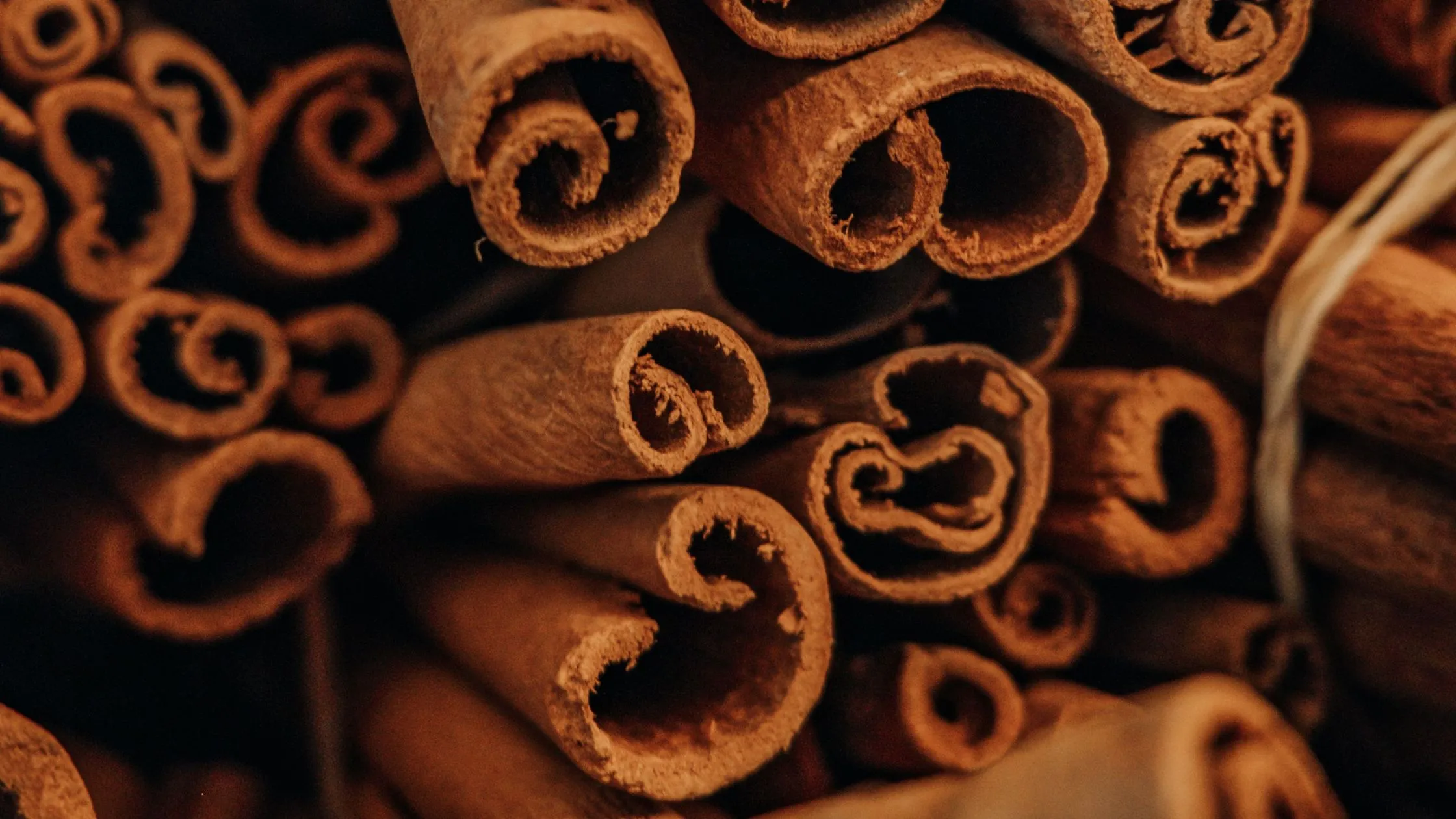
Ceylon cinnamon quills are made by peeling very thin layers of inner bark, roughly less than a millimeter thick, and rolling several of them together while still moist. The result is a quill built from many thin layers nested inside each other, similar to a tightly rolled scroll or a cigar made of paper.
Cassia bark is thicker and coarser. It’s typically rolled from one or two layers into a single, dense tube. When you look at the cut end of a Cassia stick, you’ll usually see one dominant curl, sometimes with the bark curling in from both sides toward the center, rather than several distinct nested layers.
The quickest test: look at the cross-section. If you can count several thin, separate layers, it’s very likely Ceylon. If you see one or two thick, solid-looking layers, it’s Cassia.
Check the Color
Ceylon sticks are light tan to golden brown, closer to the color of manila paper or light cardboard. Cassia sticks run darker, from reddish-brown to a deep chocolate brown, sometimes with a slightly orange undertone.
This isn’t foolproof on its own, since lighting and photos can distort color, but paired with the structure check it’s a useful secondary signal.
Test the Texture
Ceylon sticks are soft and fragile. You should be able to break a small piece by hand or even dent the surface with a fingernail. Cassia sticks are hard and woody. Breaking one usually takes real force and produces a clean, sharp snap rather than a crumble.
If a “Ceylon cinnamon” stick feels dense, rigid, and hard to break, that’s a strong sign it isn’t Ceylon, regardless of what the label says.
Check the Diameter
Ceylon quills are generally thin, often somewhere in the range of a pencil’s width or slightly less, depending on grade. Cassia sticks are usually noticeably thicker and feel substantial in the hand. Thickness alone isn’t definitive, since Ceylon is graded by quill diameter and some grades run wider than others, but an unusually thick, heavy stick sold as “Ceylon” deserves a second look.
How to Identify Ceylon Cinnamon Powder
This is where things get harder, and it’s worth being upfront about that instead of pretending otherwise. Once cinnamon bark is ground, the structural differences that make whole sticks easy to tell apart disappear. You’re left with color, texture, and aroma, none of which are as reliable on their own.
Here’s what’s still worth checking:
- Color. Ceylon cinnamon powder tends to be a lighter, more sand or tan color. Cassia powder is typically darker and more red-brown. Side by side, the difference can be noticeable, but on its own, in a single jar, it’s easy to misjudge.
- Texture between your fingers. Ceylon powder, ground from softer bark, tends to feel finer and slightly softer. Cassia, ground from denser bark, can feel a bit coarser or grittier, though this varies a lot by how finely each was milled.
- Aroma. Ceylon has a lighter, sweeter smell with citrus and floral notes. Cassia is sharper, spicier, and more assertive, closer to what most people think of as a classic “cinnamon roll” smell. If you’re used to Cassia, genuine Ceylon can smell almost mild by comparison.
- Clumping and moisture behavior. Ceylon powder, being finer, can sometimes clump more readily when exposed to humidity. This is a minor, unreliable signal at best and shouldn’t be used on its own.
None of these checks are conclusive for powder. Color and texture can be affected by grind size, storage, and blending. Realistically, once cinnamon is ground, a labeled origin and species name from a supplier you trust matters more than any visual test you can do at home. If verifying ground cinnamon really matters to you, whole sticks that you grind yourself are the more reliable choice.
Simple At-Home Checks Worth Trying
A few low-effort tests can add extra confidence, particularly for sticks:
- The bend test. Gently try to flex a stick or a thin layer of it. Ceylon layers are pliable enough to curl slightly before breaking. Cassia is rigid and will not flex meaningfully before snapping.
- The crumble test. Press a small piece between your fingers. Ceylon should crumble or flake apart with light pressure. Cassia typically resists and needs to be broken or cut.
- The layer count. Snap a stick and count visible layers in the cross-section. Several thin layers point to Ceylon. One or two thick layers point to Cassia.
- The smell test. Crush a small piece and smell it immediately. A sharp, hot, assertive spice smell leans Cassia. A softer, sweeter, slightly citrus or floral smell leans Ceylon.
None of these are laboratory-grade proof. Coumarin content, for example, can’t be seen or smelled, and it’s the main reason some buyers care about the distinction in the first place. If you need certainty rather than a strong indication, that requires lab testing, which isn’t something a home buyer can realistically do. What these checks give you is a reasonable, informed judgment for everyday purchasing decisions.
Why Ground Cinnamon Fraud Happens
It helps to understand why this distinction gets muddied in the first place. Ceylon cinnamon is more labor-intensive to produce, since the bark is peeled by hand in thin layers, and it typically sells for roughly double the price of Cassia or more. That price gap creates an incentive for mislabeling, particularly in ground products where visual verification is hardest.
Independent testing has repeatedly found this to be a real, not theoretical, problem. A 2025 study of cinnamon sold at retailers across EU countries found that a majority of samples had some kind of quality, safety, or labeling issue, and a smaller but meaningful share were specifically identified as Cassia sold under a Ceylon label. Separately, food safety agencies in Europe have found that a substantial share of cinnamon-containing products, particularly baked goods, exceed regulatory coumarin limits, largely because Cassia was used where a lower-coumarin cinnamon would have kept the product compliant.
This doesn’t mean every unlabeled or budget product is fraudulent. Most Cassia is sold honestly as Cassia, or simply as generic “cinnamon” without any claim to being Ceylon at all. The risk is concentrated in products that specifically claim to be Ceylon while cutting corners on sourcing.
What to Look For When Buying Online
Product photos and descriptions add a layer of difficulty, since you can’t touch or smell anything before you buy. A few practical habits help:
- Read past the title. A listing titled “Ceylon Cinnamon Sticks” should also state the species and country of origin in the description. If it doesn’t, that’s a gap worth asking the seller about.
- Zoom in on stick photos. Look for the same structural cues described above: thin, multi-layer quills rather than thick, single-roll sticks.
- Check the price against the category. If a product is priced at or near typical Cassia prices but labeled Ceylon, treat that as a warning sign rather than a bargain.
- Look for a named supplier or region within Sri Lanka. Sellers who source directly and are confident in their supply chain will often name a specific growing region or exporter rather than using vague sourcing language.
- Check reviews for mentions of stick structure or smell, not just taste opinions. Buyers who’ve handled the product will sometimes comment on whether the sticks match what’s described here.
A Practical Buying Checklist
Before adding cinnamon to your cart, run through this:
- Does the label state Cinnamomum verum or “Ceylon cinnamon” specifically, not just “cinnamon”?
- Is Sri Lanka listed as the country of origin?
- If buying sticks, do product photos show thin, multi-layer quills rather than thick single rolls?
- Is the color light tan to golden brown rather than dark reddish-brown?
- Is the price meaningfully higher than typical Cassia pricing in that category?
- For powder, is it from a supplier that also sells identifiable whole Ceylon sticks, suggesting a traceable supply chain?
If a product fails several of these, it’s reasonable to assume it’s Cassia, even if the word “cinnamon” appears prominently on the front.
Frequently Asked Questions
How can you tell if cinnamon is Ceylon? Check the label first for the species name (Cinnamomum verum) and Sri Lanka as the origin. For sticks, look at the cross-section for several thin, rolled layers, a light tan color, and a texture soft enough to crumble by hand. Cassia is darker, thicker, and much harder to break.
Can you tell Ceylon cinnamon from Cassia just by looking at it? For whole sticks, usually yes, since the layered structure, color, and thickness are fairly distinct once you know what to look for. For ground powder, visual identification is much less reliable, and label information matters more.
Is cinnamon powder ever verifiably Ceylon without a lab test? Not with full certainty. Color, texture, and aroma can suggest Ceylon, but they aren’t conclusive once the bark is ground. Buying whole sticks and grinding them yourself, or buying from a supplier with clear species and origin labeling, is the more reliable path.
Why does Cassia cinnamon cost less than Ceylon? Cassia bark is thicker and can be peeled and processed with less manual labor, and it’s grown at larger scale in China, Indonesia, and Vietnam. Ceylon requires hand-peeling of thin bark layers, largely in Sri Lanka, which makes it more labor-intensive and consistently more expensive.
Does the coumarin difference matter for occasional use? For occasional cooking, most food safety agencies don’t consider typical Cassia use a significant risk. The concern is mainly for people who consume cinnamon daily in meaningful amounts, such as in supplements or regular home cooking, where Cassia’s higher coumarin content can approach or exceed recommended intake limits more easily than Ceylon’s.
What does real Ceylon cinnamon look like in stick form? Light tan to golden brown quills made of several thin, separate layers rolled together, similar to a tightly wound scroll. They’re soft enough to crumble with light finger pressure and typically thinner than most Cassia sticks.
Are all “cinnamon sticks” at the grocery store Cassia? Not universally, but it’s the safe assumption unless the packaging specifically says Ceylon and names Sri Lanka as the origin. Most mainstream grocery cinnamon, ground or whole, is Cassia.